
Find Who Owns a Highland Parcel
The ownership route in Highland is a short chain of records. Find the parcel first, using an address or a map location in Highland WebGIS. Treat the owner display as an assessment clue only. Then pull the latest deed through Virginia SRA. Or ask the Circuit Court Clerk for the recorded instrument. If the transfer involved an estate, trust, or business, follow the related record. It should explain the name on the deed.
- Locate the physical parcel in Highland WebGIS using the address or another known clue.
- Copy the parcel identifier and legal description, and note any owner name shown.
- Search Virginia SRA for the latest deed into that grantee, or ask the Highland Clerk.
- Match the deed’s legal description to the parcel; check probate or SCC records if an estate or entity is named.
Highland Owner of Record and Deed Grantee
The Commissioner of the Revenue keeps Highland's real-estate assessment information. WebGIS provides the public map route into it. The live application presents its result fields dynamically. So confirm the exact owner label and update date inside the viewer itself. A deed grantee is the party named as receiving an interest in a recorded instrument. The two names can differ after a recent sale, an estate transfer, or a correction filing.
When the owner display and the newest deed disagree, do not simply pick one. Check the recording date first. Then check the parcel description. Also note whether an estate or entity appears in the instrument. Highland publishes no standard lag between closing and the next tax roll. Call the Commissioner at 540-468-2142 to learn which roll year the WebGIS result reflects. Then confirm the transfer with the Clerk.
Highland WebGIS Is the Parcel Bridge
Highland WebGIS offers several controls. These include a Select Search control, an Advanced Query, a Select Tool, Layers, a Legend, selection history, and export controls. Its dynamic search menu is not documented in the county's static material. Use the viewer to locate and select a parcel rather than to assume a complete ownership history. The county's own disclaimer notes that map accuracy is not guaranteed. It also states that the map is not a survey.
The viewer is a sensible first step in an owner lookup. The parcel shape can tie a rural situs point to the land description used in a deed. When an owner name appears, write down the exact spelling and its date context. Since the viewer builds its result card dynamically, open the live system to see the data fields it displays. The Highland WebGIS viewer supplies the parcel map and the selection tools used to identify a tract.
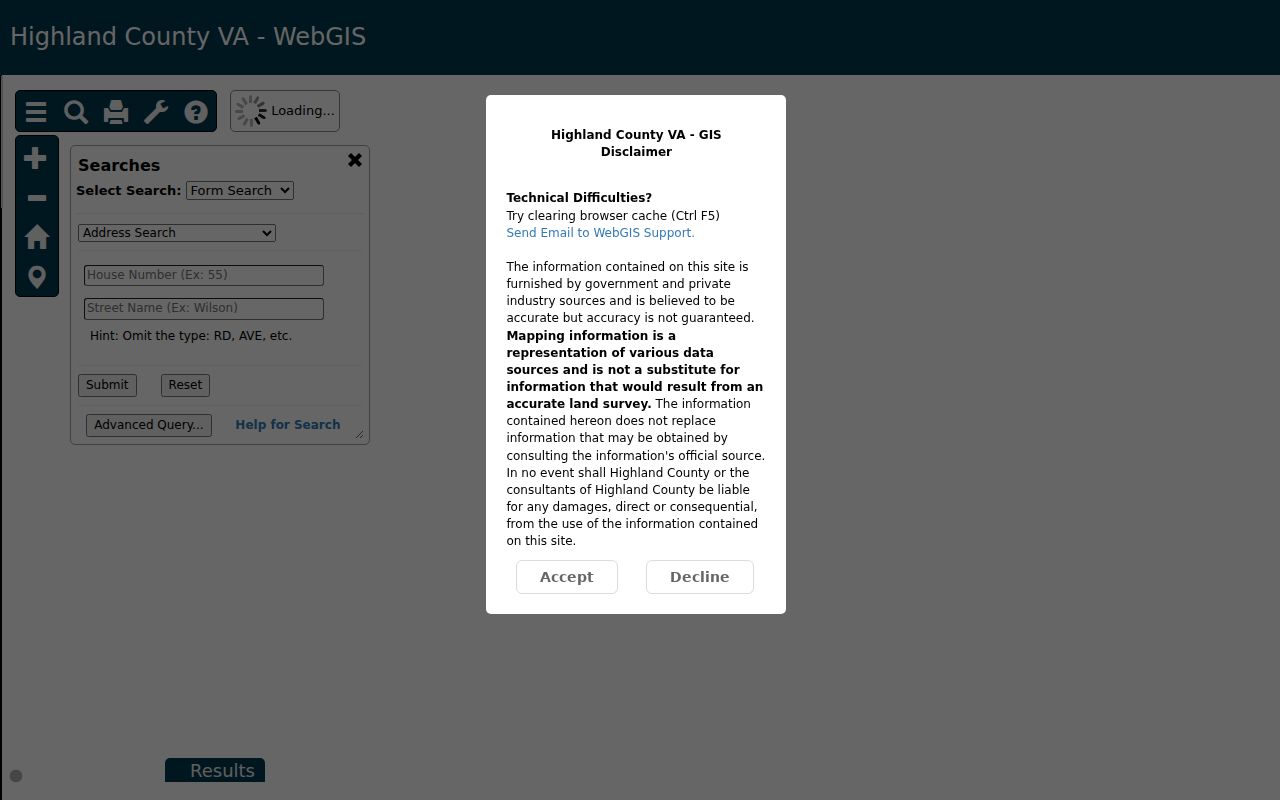
Anchor the search to the land with the map, then confirm who received the recorded interest with the deed.
Highland Sources for an Owner Name
Different Highland records name people for different reasons. Assessment data ties an owner of record to a parcel. The deed index lists a grantor and grantee for a single filing. Probate records can explain an executor or an inherited interest. The SCC shows a company's status and registered agent. It cannot prove that the company owns a particular tract.
| Source | Owner Info It Gives | Access |
|---|---|---|
| Commissioner / WebGIS | Assessment owner display and parcel context, if shown | Public map; dynamic fields need a live check |
| Circuit Clerk / SRA | Grantor and grantee on a recorded deed | Index access varies; images can be subscription-gated |
| Fiduciary file | Estate representative, order, or transfer context | Clerk request; online coverage not published |
| Virginia SCC CIS | Business status and registered-agent details | Online name or ID search; not land-title proof |
An assessment record names an owner for tax administration, not the person occupying a building. A mailing address is simply where tax notices go, not proof of where the parcel sits. A recorded deed is evidence of the transaction it describes, but it is not a complete title opinion.
- Owner of record
- The name associated with the parcel in assessment records.
- Grantee
- The party receiving an interest in a recorded deed.
- Title
- The legal rights and interests in land, which need more than one name lookup to assess.
- Situs address
- The physical location, distinct from the owner’s mailing address.
Highland Mailing Address Versus Parcel
Rural Highland parcels often carry a post office box, a rural route, or a mailing city. That city may differ from the land's actual location. Monterey on a tax notice does not mean the parcel lies inside the town. The county has one incorporated town and no separate Monterey assessor or deed office. Identify the mapped parcel in WebGIS. Then use the legal description to confirm which land the deed covers.
Building and Zoning assigns E-911 addresses. This helps when a road address is missing or has changed; call 540-468-2323 for that county function. A mailing address serves correspondence well. Still, it should never be the sole link between an owner name and a property.
When a Highland Owner Is an Entity
A trust or limited-liability company may appear as grantee. An estate may hold land while a fiduciary manages it. Names vary by initials, spouse, trustee role, or estate wording. Read the vesting clause in the recorded instrument. Do not assume that the owner of an entity owns its land. Do not assume that a registered agent controls the property either.
Virginia SCC's Clerk's Information System searches entities by name or ID. It returns status, registered agent, office, and filings. That state filing helps interpret a business name. But the Highland deed remains the property-specific record. When an estate is involved, ask the Circuit Clerk for the fiduciary file. Connect any executor deed to the parcel's description. The Virginia SCC entity search is useful for confirming the exact business name. It also shows the public status given in an instrument.
A state entity record identifies a business; only the recorded Highland deed connects that entity to a particular tract.
Highland Ownership Can Lag a Recent Transfer
The Commissioner of the Revenue publishes no stated refresh cycle for its roll. There is also no published guide to how long a transfer takes to appear. A deed can sit recorded while the assessment display still shows the prior owner. When a recent sale matters, search the latest SRA entry by grantee and date. Then ask the Commissioner which year the parcel card reflects. A current assessment label alone is never proof that no later deed exists.
Highland's clerk page traces its land records to 1847. It provides in-person and written copy service. Online image access may require a local-authorized subscription. Call 540-468-2447 when the index is unclear or an image is unavailable. The current owner record page explains the present assessment name. It also shows how to confirm that name against a deed.
When online systems cannot answer a narrow ownership question, Virginia FOIA opens a route to existing public records. Highland names the County Administrator's Office as its records contact. The address is PO Box 130, Monterey, VA 24465; phone 540-468-2347 and hcboard@highlandcova.org. The usual response period is five working days. The county notes a seven-day extension, for up to twelve working days total. State an address or parcel, a date range, and the assessment or instrument type. That keeps the request specific.
Limits of a Highland Owner Lookup
A lookup has limits. It cannot prove occupancy. It cannot guarantee clear title, either. A Highland owner lookup may return an assessment name or a deed party, yet LLCs and trusts often hold the actual interest, the roll can lag a recent deed, and protected address programs shield some details. Never combine unrelated personal records and treat the result as ownership evidence.
Lawful use. Highland property ownership records are useful for property research, due diligence, and civic review. Do not use an owner’s information to stalk, threaten, or harass anyone.