
Highland County Deed Records and Instruments
The Highland Circuit Court Clerk serves as the recording office for the county. Deeds and other real-estate instruments are filed there. Each type answers a different question. A plain deed records a transfer between named parties. A deed of trust secures a debt. A release or satisfaction shows that an earlier claim was discharged. The land-record collection reaches back to the county's formation in 1847. The online cutoff year is not posted. A missing result only means the search route should change, not that the record fails to exist.
| Deed Type | What It Does | Common Use |
|---|---|---|
| Warranty deed | Conveys the grantor’s stated interest with deed promises | Review a transfer between parties |
| Quitclaim deed | Conveys whatever interest the grantor holds | Review a family or title-cleanup transfer |
| Deed of trust | Creates a security interest tied to a loan | Check recorded encumbrances |
| Executor or administrator deed | Shows an estate representative’s conveyance | Connect probate and land records |
| Release or satisfaction | Records discharge of a prior claim | Check whether a recorded lien was released |
Deeds and liens can touch the same land, yet they do different jobs. The deed shows a stated conveyance. A deed of trust, mechanic's lien, easement, or lis pendens can affect the property without moving title to a new owner. Highland property records therefore work best when searched by instrument type and party name, with the legal description serving as the filter that separates similar parcels from one another.
Search the Highland Grantor-Grantee Index
Virginia's SRA service gives clerks a shared electronic path into their land records. Pick Highland County as the locality first. From there, a search can run on a grantor name. It can also run on a grantee name, an instrument type, a date range, or a known book, page, or document number. The county's own description does not publish the document-type dropdown or the date labels. The earliest online year is likewise unstated. Treat the SRA screen as one route among several.
| SRA field | Search purpose | Highland qualification |
|---|---|---|
| Locality / court | Choose the land-record custodian | Select Highland County if available |
| Grantor name | Find a party who conveyed | Exact match rules are not published |
| Grantee name | Find a party who received title | Useful for backward chain work |
| Instrument type | Narrow by kind of filing | County list is not documented |
| Date range / book-page | Limit or retrieve a known entry | Use the format shown in the live portal |
The Virginia SRA landing page makes clear that an index entry and its image do not follow one access rule. A clerk can open the index for free. Images sit behind an authorized subscriber agreement and payment. Sign in before moving through SRA pages, and sign out when finished. The SRA land-record landing screen is the state's entry point for the Highland deed index.
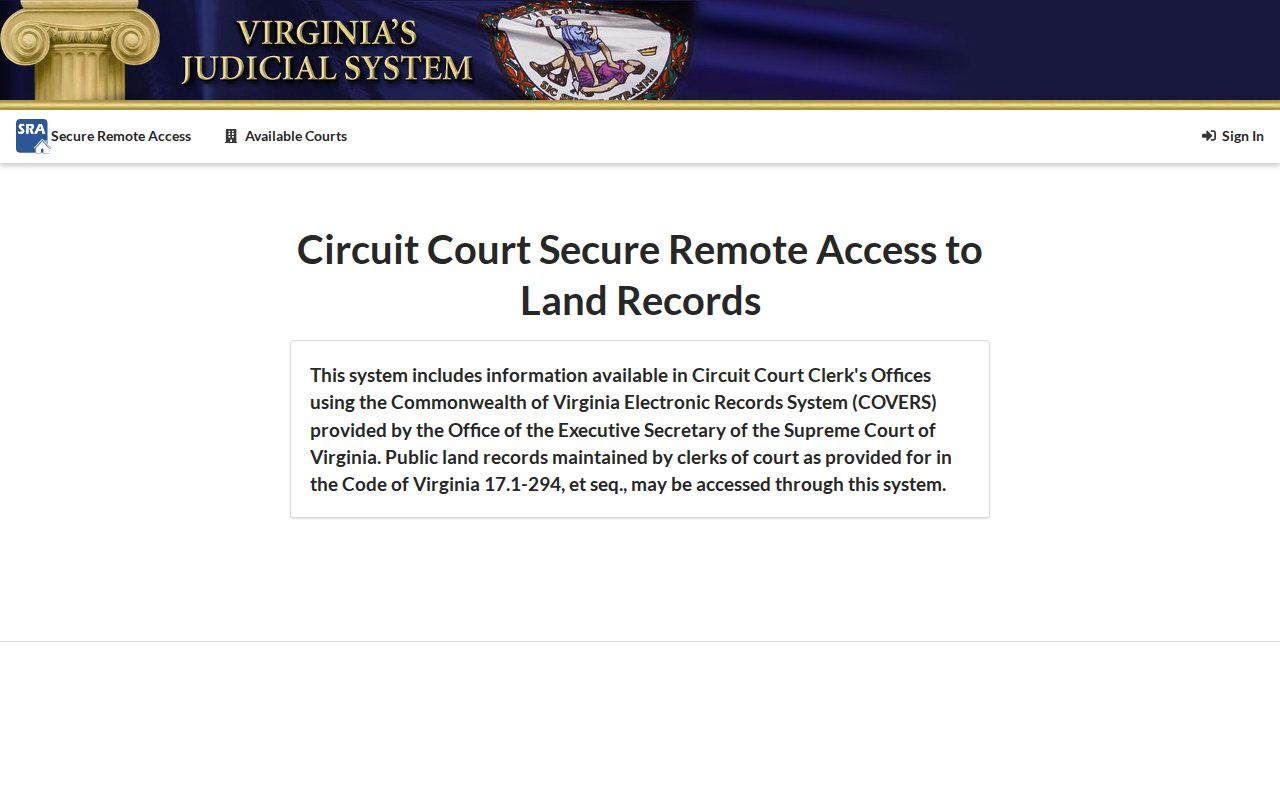
The screen belongs to a shared state service, so confirm Highland-specific coverage and image terms with the local Clerk.
Highland Book, Page, and Legal Description
A deed reference may cite a book and page or another instrument number. Keep that citation exactly as the index or Clerk gives it. Then read the instrument's grantor, grantee, date, legal description, and any referenced plat. Older conveyances often omit a modern situs address. That happens often where the land carried a farm or tract name instead.
In a deed chain, the legal description matters most. It keeps a same-name party from pulling you onto the wrong property. A subdivision lot may point to a recorded plat and lot number. Rural acreage may rely on metes-and-bounds calls. If the description stays unclear, compare the instrument with the county map as a research aid. Then bring in a surveyor for a boundary opinion.
Highland Grantor and Grantee Entries
The Highland index runs on party names, not on a modern street address alone. A grantor transfers an interest; a grantee receives it. Begin with the name on the newest deed. Then track that party backward as a grantee in earlier instruments. At every step, check the dates. Check the parcel description, and any book-page reference before moving on.
- Search the current deed recipient as grantee and identify the likely purchase instrument.
- Read the grantor and the full legal description in that deed.
- Search that grantor as a prior grantee and match the land description.
- Repeat until the online index ends, then continue in a deed book or microfilm.
- Grantor
- The party named as conveying an interest.
- Grantee
- The party named as receiving an interest.
- Chain of title
- The linked sequence of recorded conveyances for one parcel.
- Book and page
- A volume-and-page reference; copy the Clerk’s exact citation.
Highland Deed Books Start in 1847
Highland County was formed from Bath and Pendleton territory in 1847. The Library of Virginia lists Deed Book 1 for 1847 to 1853. Books 2 through 3 reach 1870. Book 4 covers 1870 to 1876. Books 11 and 12 cover 1899 to 1904. A general deed index spans 1847 to 1902. A grantee index series runs from 1847 to 1981. Confirm the reel sequence and request instructions in the catalog before ordering anything.
Older deed images stay reachable through paper books or microfilm even when the SRA search shows nothing. Some reels are marked for interlibrary loan. The Circuit Clerk also takes records requests at the courthouse and by writing; call first, because published counter hours are not available. When a chain predates Highland's creation, continue into Bath or Pendleton records. Do not treat 1847 as the land's first transfer.
Treat the index as a locator, never as a substitute for the instrument itself. The grantor index points toward an outgoing conveyance. The grantee index finds the earlier deed by which that same party took the land. Copy the exact book and page into your notes before ordering a reel. Or request a written copy from the Clerk. The Library of Virginia Highland collection list identifies the books and index series.
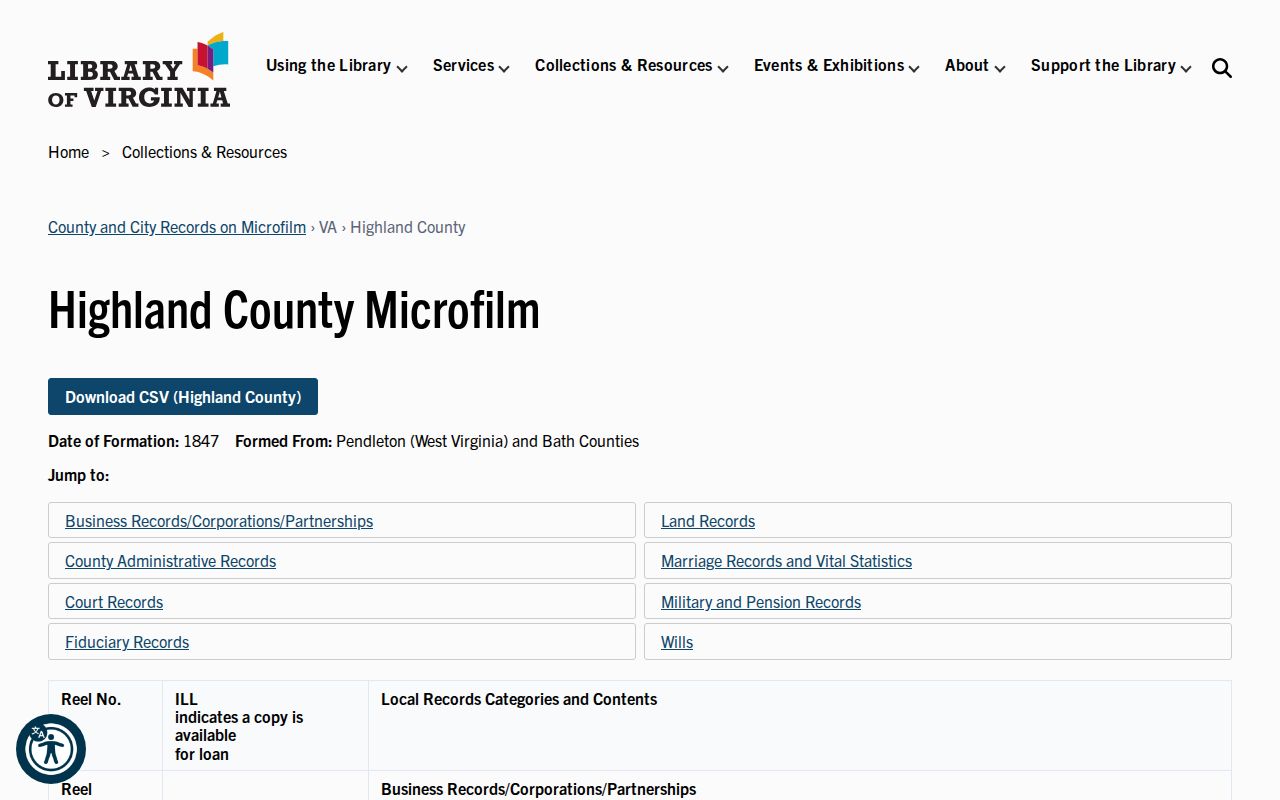
Use the archive inventory to choose a book or reel. Then verify the property through the parties and the description on each deed.
Requesting a Highland County Deed Copy
Copies from the Highland Circuit Clerk run $0.50 per page. Bigger files and extra services can add charges, and the certified-copy price is not stated. When you write, give the Clerk what the search needs: the parties, a rough recording date, a book and page or instrument number, and the parcel description. Written requests are preferred, so state your mailing address and copy preference plainly. The office sits at 165 W Main Street, PO Box 190, Monterey, VA 24465, and 540-468-2447 answers before you visit. The Highland Circuit Clerk's land-record page lists the record groups and the copy rate.
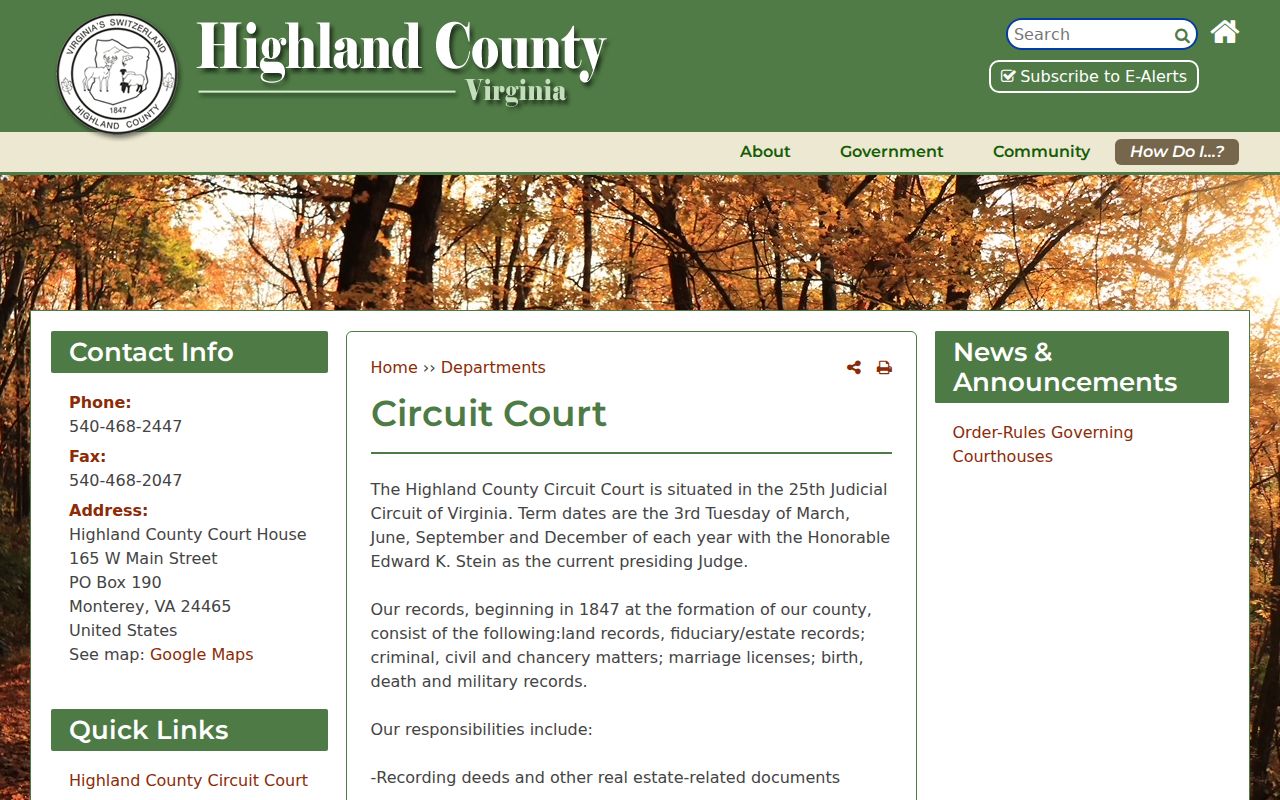
For deed records, start with the county page. SRA's subscription terms govern viewing, not the Clerk's copy service, so order official copies through the county.
Highland Estates, Releases, and Liens
Not every deed chain runs through a plain sale. The Circuit Clerk holds estate and fiduciary files alongside land instruments. An executor or administrator sometimes needs a court order before a deed can be recorded. If the owner of record died, or an estate sits between two conveyances, search the probate file and the land index side by side. Highland land records also carry deeds of trust, releases, easements, mechanic's liens, and lis pendens. Search by party name and legal description both. For business debtors and federal tax liens, Virginia runs a separate path. The SCC's UCC search covers those filings. Its CIS system offers PDF images for filings since October 1, 2003. That statewide tool does not replace the Clerk's land index. The Virginia SCC UCC and federal tax lien page explains the debtor-name and file-number searches for those filings.
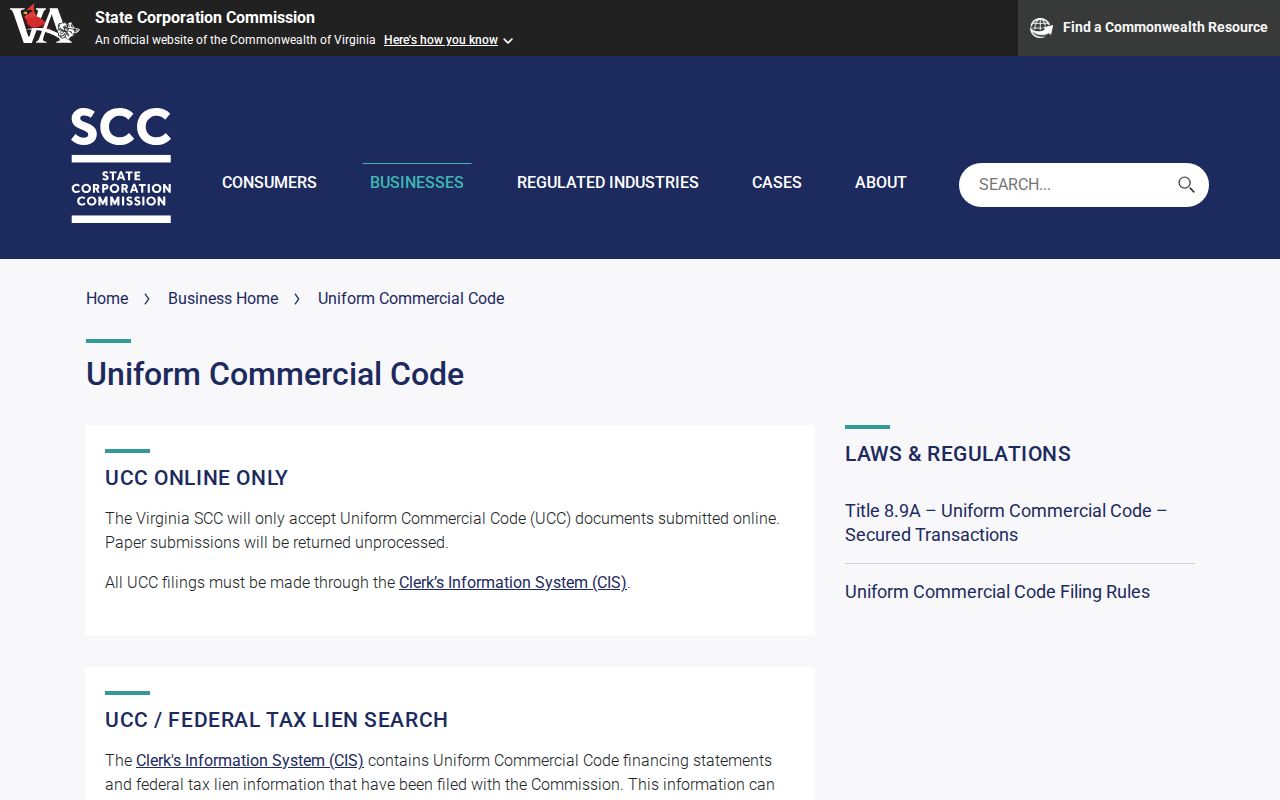
Handle business and federal filings through the SCC route. Then come back to Highland's Clerk index for any land instrument tied to the parcel.
Get a Highland County Deed Copy
For Highland deed records, use SRA first when the index and image are open, then lean on the Circuit Clerk for confirmation or a copy. Paper copies cost $0.50 per page at the published rate. Ask for a total before ordering a large file, since added fees can apply and the county page gives no certified-copy or current subscription price. A written request should name a party, the record date, and the legal description or citation.
Recorded, not guaranteed. An index entry shows that an instrument was recorded, not that the title is clear or that no unrecorded interest exists. A complete title review needs the instruments and professional analysis.