
Highland County Property Value Types
Three numbers get confused on any Highland parcel. The assessed value comes from the county's assessment system and drives the tax roll. A market estimate is something else again. The deed recorded by the Circuit Clerk is the authority on what a transfer stated as consideration. A current appraisal stands apart as a professional opinion. Confirm the field label and tax year on the live WebGIS result. The static portal text does not spell out every value-card entry.
| Value | What It Is | Where |
|---|---|---|
| Assessed value | County figure for real-estate tax administration | Commissioner / WebGIS; exact card label needs live check |
| Market value | Likely sale value in an open market, not verified as a county field | Independent market analysis or appraisal |
| Sale consideration | Amount stated in a recorded transfer when available | Circuit Clerk deed; WebGIS sale display not confirmed |
| Land and improvements | Possible assessment components; field display not captured | Ask the Commissioner for parcel detail |
Highland does not publish its assessment ratio or its mass-appraisal method online. Never assume assessed value equals sale price. A ratio from another county will not apply. Ask the Commissioner of the Revenue. The office can confirm which tax year and which value components appear on a specific parcel card. The Treasurer's tax bill is separate. It shows a charge and account status, not a market value.
Highland Assessed Value on WebGIS
The Commissioner of the Revenue keeps Highland County's assessments. Highland WebGIS is the public route to a parcel. Its static text does not spell out every owner and value field, so open the live result card for the parcel you need. Write down the tax year and the total shown. Note any land or improvement split only if the card exposes one. If a component is missing, ask the Commissioner rather than inferring it.
Highland publishes no historic roll coverage and no date for its last reassessment online. An older value may take an office request. Give staff the parcel identifier and legal description, because a rural address or mailing label can vary from record to record. That keeps everyone looking at the same tract.
Highland Sale Price Is a Deed Question
A deed records the parties and the legal description of a transfer. Consideration may appear in or beside the recorded instrument. The WebGIS value card does not confirm a last-sale field. Search the newest deed by grantor and grantee. Then read the instrument. Never treat an assessment figure as the price paid. Remember that not every transfer was an open-market sale.
Family transfers rarely mirror ordinary sales. The Clerk's record names the legal act and the parties. It is not a current appraisal. So match parcel, date, and transfer context before reading any number as a market signal.
Highland’s 2025 Tax Rate Context
Highland's FY2025 audit reports a real-estate tax rate of $0.51 per $100 of assessed value. The rate rose from $0.44 in 2024. That is historical tax context. It does not estimate any property's worth. The rate applies to assessed value under the county's tax rules. No rate turns a tax bill into a market price.
A rate alone is not the tax due. The bill may carry other charges, penalties, interest, or payment status. Those details appear in the current Treasurer notice. Contact the Treasurer for current amounts and dates. The fuller route through bills and collections sits on the Highland property tax records page.
Highland County Housing Value Is Countywide
Census QuickFacts puts the median owner-occupied housing value in Highland County at $200,000 across 2020–2024. That is a countywide housing measure. It is not a parcel assessment. It is not a Monterey-only figure. And it is not a sale estimate for any named property. Treat it as broad context only. Keep it apart from the assessment roll and from consideration stated in recorded deeds. The Census QuickFacts profile for Highland County supplies this population and housing-value context.
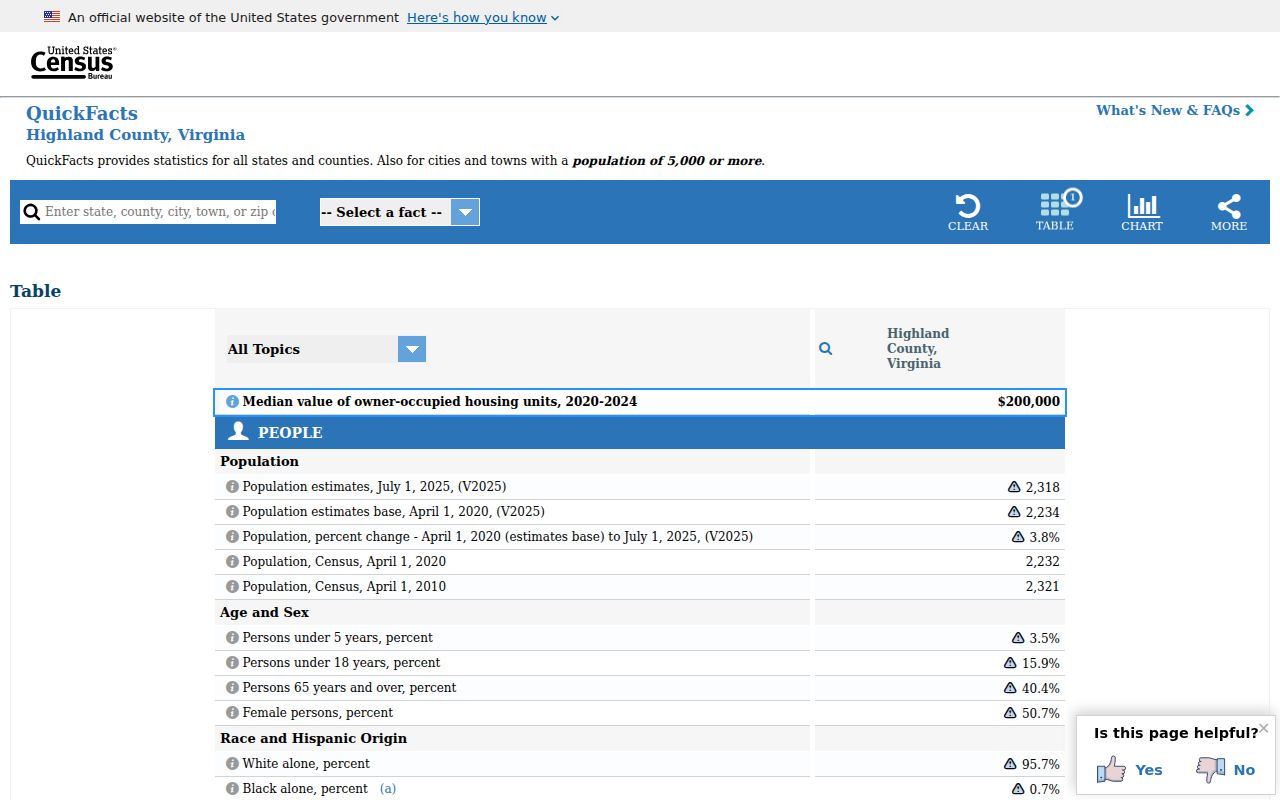
A parcel's tax value still comes from the Commissioner's records.
Highland Reassessment Timing Is Unpublished
Highland publishes no revaluation year, reassessment cycle, or current assessment ratio online. Ask the Commissioner when the parcel was last reviewed. Ask which tax year appears on the record too. If an assessed value changed, request the parcel data and the explanation from that office. A neighbor's number is no substitute for a comparable sale or a formal valuation.
Exemption and classification flags can change taxable treatment. Highland posts no local exemption list or online application. Questions about exemptions, a bill, or an appeal belong with the Commissioner and the Treasurer.
Check a Virginia Real Estate License Separately
An assessment, a Census statistic, and a recorded sale each answer a different value question. A formal valuation calls for a professional. Virginia's public licensing route exposes credential details. The Virginia DPOR License Lookup searches professional licenses, including real-estate credentials, with fields that load in the live portal.
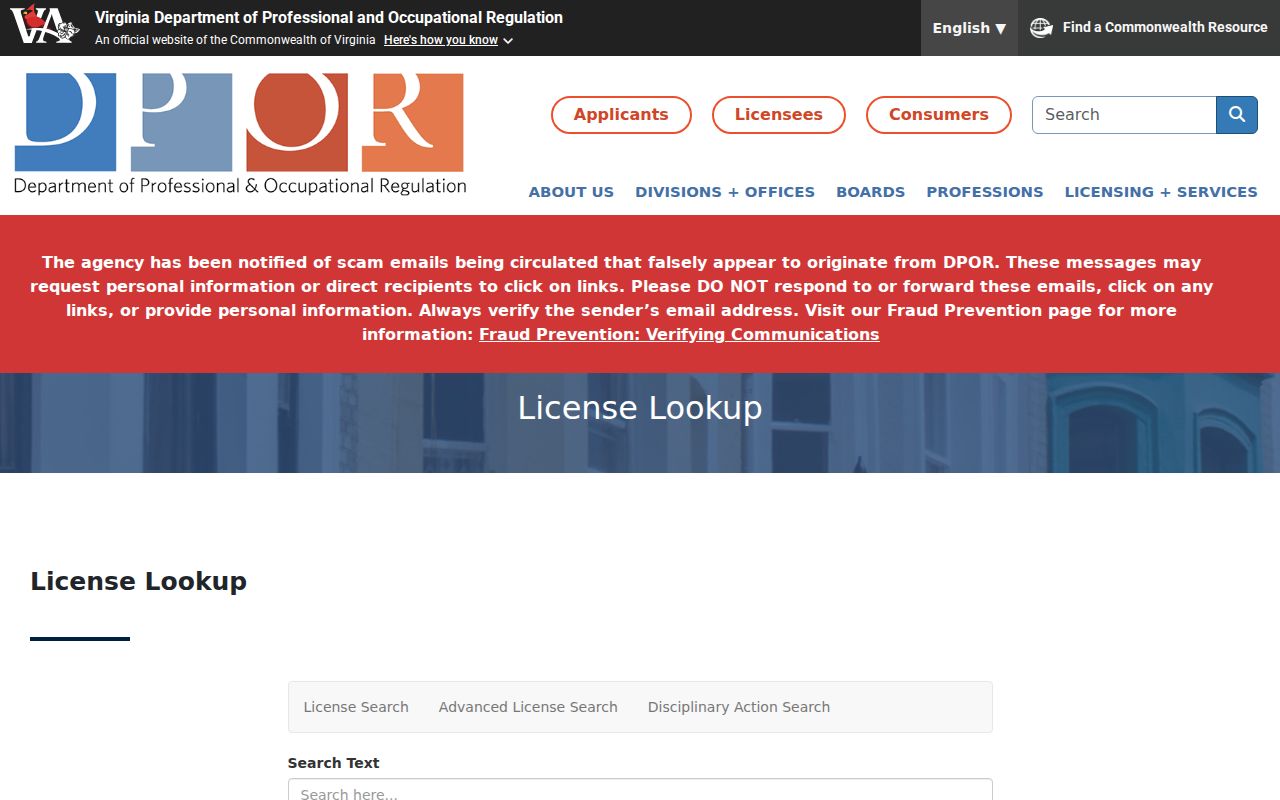
A license on its own proves nothing about value. It does not replace an appraisal or any formal valuation report. So weigh any professional work against the property data, and weigh it against the purpose it serves.
To compare figures cleanly, jot down the parcel identifier, the assessment year, the acreage, and the land and improvement components. Do this when the live card shows them. Note the date you viewed the result, too. For recorded sales, keep the deed date and the transfer type close at hand. A family conveyance or an estate sale may not reflect an open-market transaction at all. Dated notes like these keep county tax administration separate. They also keep a public housing statistic and a professional valuation from collapsing into one misleading number.
Monterey Has No Separate Value Roll
Monterey is Highland County's only incorporated town, and it keeps no separate value roll. Its property records stay with the county. Census QuickFacts offers countywide housing context, but no Monterey assessment series exists there. A Monterey mailing address can even describe rural land outside town limits. Pin the parcel down in WebGIS, and compare the deed description. Do this before treating town text as a boundary. For a Monterey value study, gather tax year and assessment fields. Pull them from several county parcel results. Then ask the Commissioner about the roll's timing. A recorded deed consideration can help. The transfer type and date must make it a fair comparison, though. The county publishes no local trend line or fast-appreciating district for the town.
Look Up a Highland Property Value
Start with the parcel. In Highland County, the parcel number is the key that unlocks a property value lookup. WebGIS links an address to its assessment record. However, the exact fields and the parcel-number format are not published in static material. Note what the current card actually displays. Ask the Commissioner when you need the tax year confirmed or an older value checked.
- Search Highland WebGIS by the address or another live search option.
- Select the parcel and copy its identifier and legal description.
- Record the assessed value and tax year only if the card displays them.
- Search the latest deed for a transfer reference; ask a licensed appraiser for a market opinion.
- Assessed value
- A county tax-administration figure tied to a parcel and year.
- Market value
- An estimate of likely exchange value; Highland’s exact county method was not found.
- Sale consideration
- The amount stated in a transfer record, where reported.
- Reassessment
- A later review of assessed value; Highland’s cycle is unpublished.
What a Highland Assessor Value Is Not
A Highland assessment is not a licensed appraisal. It is a county tax record. It is no guarantee of a future sale price either. The figure may reflect a prior tax year. The county does not publish its revaluation date. A recorded deed proves one transfer only, not the value of every similar property nearby.
Value versus price. Highland assessed value is for tax administration and does not state what a parcel would sell for. Use an appraiser for a property-specific market opinion.