
Highland County Owner of Record Fields
The Commissioner of the Revenue keeps the real-estate assessment data for Highland County. WebGIS is the public map route to it. The parcel card is dynamic, and the county's help text does not list every label for owner, address, sale, or vesting fields. Treat any field inventory as a checklist. Record only what the live card actually shows.
| Owner display | Confirm the exact name and label shown in the live result |
|---|---|
| Vesting style | Check the recorded deed for a trust, entity, estate, or joint party |
| Mailing address | Correspondence destination; may differ from the land |
| Situs address | Physical location or E-911 address, if displayed |
| Deed reference | Verify with the Circuit Clerk; card reference fields are not confirmed |
| Recording date | Use the newest recorded instrument to check a recent change |
An owner-of-record name is an assessment entry, nothing more. It says nothing about who occupies the building. The mailing address shows where tax correspondence goes, which may be a PO box or an out-of-county location. A grantee is the deed's receiving party. Compare the assessment result with that newest deed before calling any name current.
Highland’s Owner Display Needs a Date Check
Highland's WebGIS offers a public parcel search. The portal's static pages show no owner update date. Open a live result and note any tax year or record date on the card. Ask the Commissioner whether the value comes from the current assessment roll and when the parcel was last changed. No closing-to-roll timeline is published.
The viewer's exact fields must be checked interactively. The Highland WebGIS viewer is the public map entry point for that parcel work.
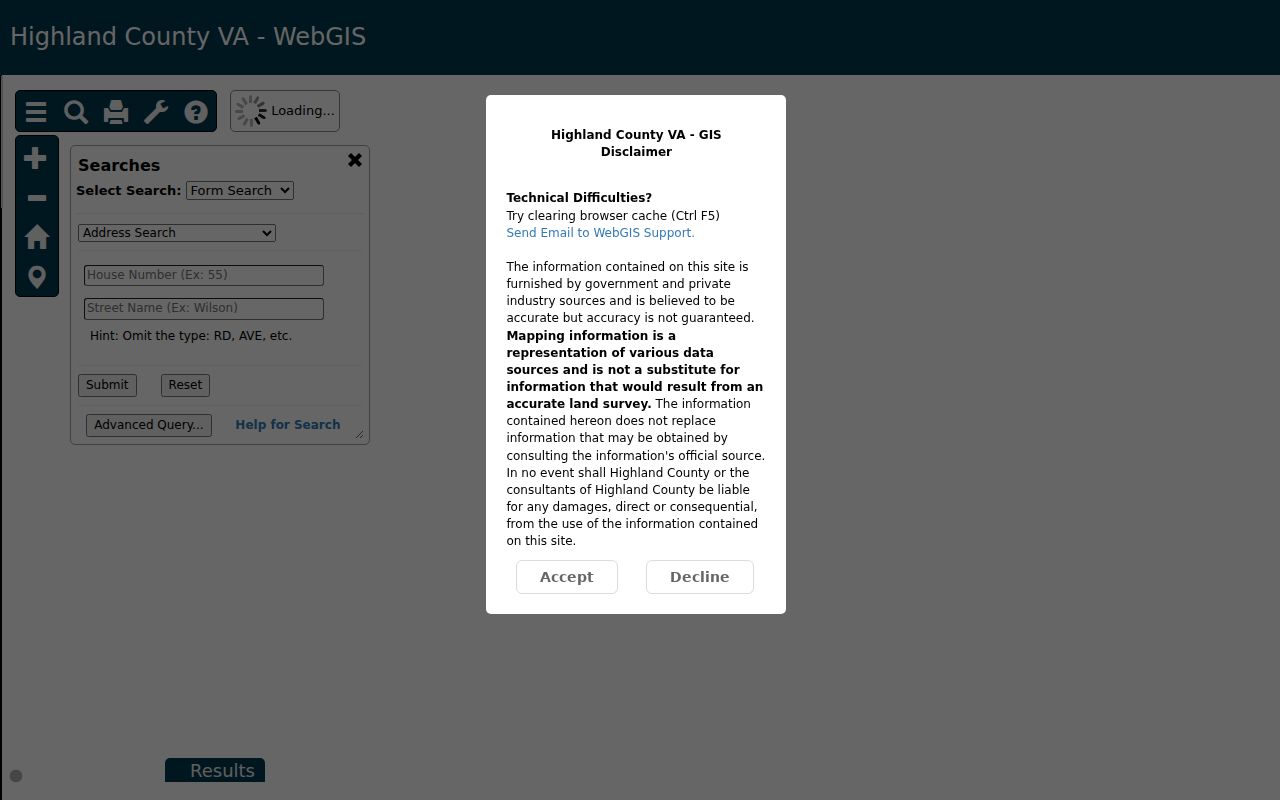
Use the selected parcel as an index into the land records. Ask the Commissioner what date that display represents.
Highland Deed Grantee Versus Current Roll
A deed grantee and an assessment owner can disagree for a while. The Clerk records the instrument. The Commissioner keeps the tax assessment. Highland states no schedule for how soon the roll reflects a newly recorded transfer. After a closing, search the newest deed and compare its legal description with the parcel.
The deed is the direct transfer source. The assessment record stays the county's tax-side owner display. Virginia separates SRA index access from image access. A local index may be free when enabled, while full images can require a Clerk-authorized subscription, and Highland publishes neither its cutoff nor its price. If an image is unavailable, call 540-468-2447 or send the Clerk a written request.
Confirm the Current Highland County Owner
Compare the parcel's assessment name with the newest recorded deed. Use the same legal description at each step. Names that differ call for a recording-date check. Contact the Commissioner rather than treating an older tax display as conclusive, and keep the parcel location consistent throughout.
- Find the parcel in Highland WebGIS and note the owner display and date information shown.
- Search Virginia SRA for the newest deed into the listed grantee, using name and date.
- Compare the deed’s legal description with the mapped parcel and assessment record.
- Ask the Commissioner about a discrepancy or roll year; ask the Clerk for an image or copy.
- Owner of record
- The name associated with a parcel in assessment information.
- Assessment roll
- The tax-side list of real-estate values and related parcel data.
- Situs and mailing
- The physical location and correspondence address, which can differ.
- Recording lag
- The time between a deed being recorded and another office reflecting it; Highland gives no typical interval.
Highland Trust, Estate, and LLC Names
Some Highland parcels sit under a trust, a company, or an estate name. A deed can name a trustee's or executor's capacity. The assessment card may use a shortened owner label. Read the vesting language in the deed itself. A registered agent is not the owner of the land, and only the land instrument ties an entity to a parcel.
For an estate transfer, ask the Circuit Clerk for the fiduciary file. The Clerk keeps estate records alongside deeds. Online estate coverage is not stated. A probate order, an executor deed, and an assessment entry each describe a different part of the transfer.
The Virginia SCC entity search can identify an LLC's public status and registered agent. That status helps interpret a deed name. The parcel connection still lives in the land instrument.
Use the entity search to decode the name, then verify the parcel in the deed.
Highland Owner Mailing and Situs Fields
Rural mail patterns make Highland's address pair matter. A Monterey mailing city can serve a parcel outside the incorporated town limits. A PO box may take the tax bill for acreage far from town. The situs address shows where the land lies. The mailing address only routes correspondence.
Building and Zoning assigns E-911 addresses and answers address questions at 540-468-2323. Never substitute the mailing address for the legal description. Near Monterey, compare the mapped town boundary with the deed's jurisdiction wording. Use that mailing address only for lawful property purposes.
Highland Clerk Copies Confirm the Transfer
The Circuit Court Clerk’s office sits at 165 W Main Street, PO Box 190, Monterey, VA 24465, and answers the phone at 540-468-2447. Copies run $0.50 per page, though large files can carry additional charges, and no certified-copy fee is published. A written request goes faster when it names the parties, the approximate date, the parcel, or a book-and-page reference. Call ahead for current counter procedures.
The Highland Circuit Clerk record page lays out the local copy route, and the Highland deed records page walks through deed images and their index entries in more detail.
Two dates matter when you want the owner of record as of a specific day. One is the assessment year shown in WebGIS. The other is the deed’s recording date. The public pages never say how fast a fresh conveyance reaches the county assessment display, so ask the Commissioner which roll is on screen and let the Clerk pull the filed instrument. Neither date alone settles questions of beneficial control, occupancy, or a full title chain.
Copy names exactly as written, with the stated capacity attached. A trustee, executor, spouse, or limited-liability company may stand in as the deed party, while a county assessment card sometimes abbreviates or groups names. Set the full vesting clause and the parcel description beside the current card and compare. For a business name, the SCC entity lookup shows its public status and registered agent, but a separate land instrument is what ties that company to the Highland parcel.
Contact Through a Highland Property Record
A mailing address on a Highland County property record is a correspondence field. It is not an invitation to misuse personal information. Use it for a lawful, clear property purpose. Virginia's Address Confidentiality Program provides substitute-address handling for eligible participants. Never try to expose a protected home address through unrelated data.
Lawful use. Use Highland owner information for a property matter or civic research. Do not use it to stalk, threaten, or harass anyone.